Our Team
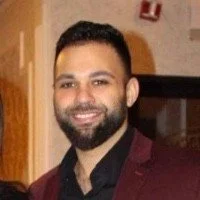
In 2018, I co-founded Preventa Medical Corporation to pursue innovative new approaches for bringing improved retinal screening and specialist care to patients, especially those who do not have ready access to an ophthalmologist. We are developing a comprehensive end-to-end system of hardware and software solutions to let primary care physicians deliver high-quality retinal screenings to their patients.
I am board-certified by the American Board of Ophthalmology. In my practice, I specialize in treating the complete array of retinal diseases, including macular degeneration, diabetic retinopathy, and retinal detachment. I am dedicated to treating my patients with compassion and expertise, as well as developing more streamlined, efficient, and cost-effective methods of care.
I completed my vitreoretinal fellowship at the renowned Barnes Retina Institute in St. Louis, where I gained extensive expertise in vitreoretinal surgery and first-hand experience with diverse medical diseases of the retina, uveitis, and intraocular tumors. Prior to my retina fellowship, I served as Chief Resident for Washington
University in St. Louis, which gave me the opportunity to instruct young ophthalmologists in the art of ophthalmic surgery. I directed the eye trauma service for the entire university and supervised the Barnes Eye Clinic.
After training, I joined the faculty at the University of Pennsylvania’s prestigious Scheie Eye Institute, where one of my clinics was completely dedicated to the cutting-edge diagnosis and management of age-related macular degeneration (AMD). I have continued this commitment to evaluating and developing new standards of care in my own practice, which is an active participant in diverse clinical trials and studies.
Ramin Schadlu - Co-Founder & Chief Medical Officer
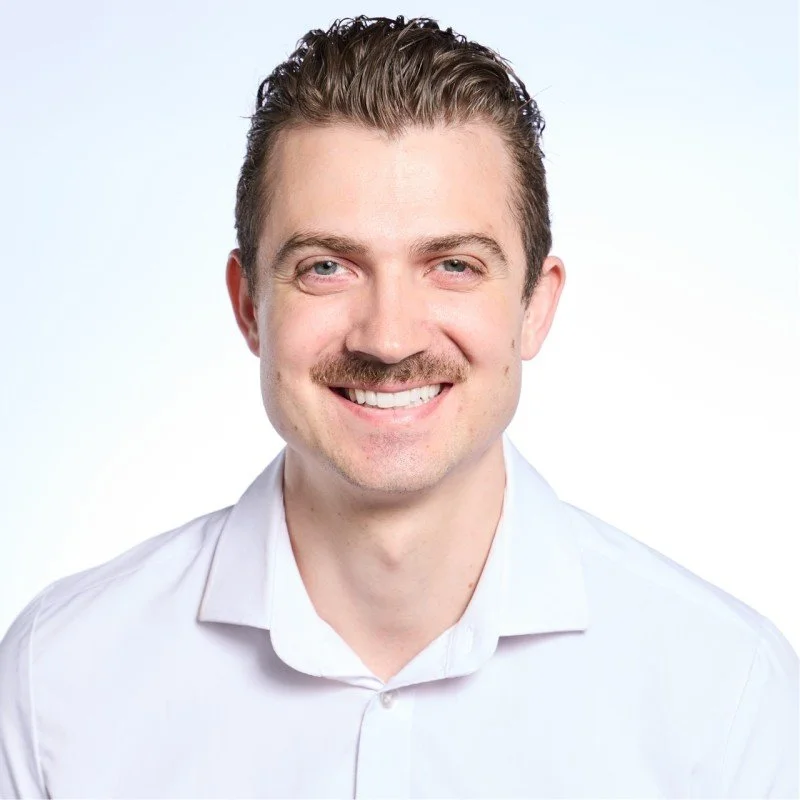
Eric is currently Chief Technology Officer at Preventa Wellness where he develops, overseas, and is the main executive on the technical side. He oversees the hardware and software development, that has contained as many as 5 engineers. His current product has been in operations since late 2019, and continues to expand in the marketplace, with many other products on the horizon. In early 2020, Mr. Hassey won the very prestigious National Science Foundation Small Business Innovation Research Program for Phase 1 for his proposal on A hand-held retinal imager that incorporates a flat lens and total internal reflection illumination. He is the Principal Investigator of this project, and overseas the entire operations.
Mr. Hassey has been a leading machine learning and algorithm developer for 7+ years. While at the University of Iowa completing his Master of Science in Electrical & Computer Engineering, he specialized in machine learning related to medical applications. He was completing his research at the Carver College of Medicine focusing on applying algorithms to classify retinal degeneration associated with ganglion cells. This led to the development of numerous co-authored papers with Dr. Stephen Stasheff, who’s currently a Staff Clinician at The National Eye Institute.
Upon finishing his work at the University of Iowa, Mr. Hassey joined Massachusetts Institute of Technology Lincoln Laboratory where he continued his development in the machine learning space in atmospheric sciences. While at MIT, him and his colleagues won the Best Invention Award in 2014 for the novel development of the Offshore Precipitation Capability (OPC). While at MIT, Eric has authored or co-authored over 10 papers all relating to machine learning and image processing. In 2018, a paper Eric co-authored won the prestigious Best Paper Award from MIT. This work culminated into the very distinguished award of the R&D 100, which selects the best 100 innovations in research and development.
Mr. Hassey continued his technical work as a Co-Founder and Chief Technology Officer at a start-up called iLoopes, that promised to develop wearable devices for the blind. The development led to the product being awarded the “Winning Pitch Challenge” at the Annual Meeting of the American Society of Retina Specialists, that was selected from a panel of ophthalmologists and investors who deemed this product a highly innovated and essential device.
Eric P. Hassey - Co-Founder & Chief Technology Officer
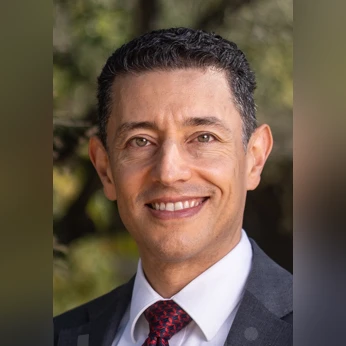
Dr. Fowers is a biomedical informatician and applied data scientist whose research focuses on understanding, measuring, and predicting long-term health behavior maintenance using large-scale longitudinal data. He earned his Ph.D. in Biomedical Informatics from Arizona State University, where his dissertation examined computational approaches for detecting behavioral patterns associated with sustained healthy behaviors. His training spans econometrics, advanced biostatistics, machine learning, and database systems, with extensive experience programming in Python, R, SQL, and related statistical and computational tools.
Dr. Fowers’ research integrates methods from machine learning, causal inference, and health informatics to study habit formation, mindfulness, physical activity, and mental health outcomes, particularly using mobile and wearable health data. He has authored and co-authored peer-reviewed publications in leading journals including the Journal of the American Medical Informatics Association, Journal of Medical Internet Research, Mindfulness, Behavioral Sciences, Brain Imaging and Behavior, and BMJ Open. His work has contributed novel objective metrics of behavioral consistency, temporal patterning, and adherence that advance the measurement of sustained engagement in digital health interventions.
In addition to his academic research, Dr. Fowers has held applied research and data science positions across healthcare, academic medicine, and industry. His professional experience includes roles at Arizona State University, Brigham Young University, Mayo Clinic, and Select Health, where he has developed and deployed machine learning models for clinical imaging, health economics, and healthcare operations. His work bridges methodological rigor and real-world impact, with an emphasis on scalable, reproducible analytics and the responsible application of artificial intelligence in healthcare systems.
Dr. Fowers has substantial teaching and mentorship experience in statistics, biomedical informatics, and programming. He has served as a graduate teaching assistant for courses in advanced biostatistics, health informatics, databases, and medical imaging, and previously taught Python and applied mathematics at the undergraduate level. He is also an active science communicator, maintaining an online educational platform with over 10,000 subscribers focused on Python programming and machine learning. His interdisciplinary background reflects a commitment to advancing data-driven health research while training the next generation of computational scientists.